
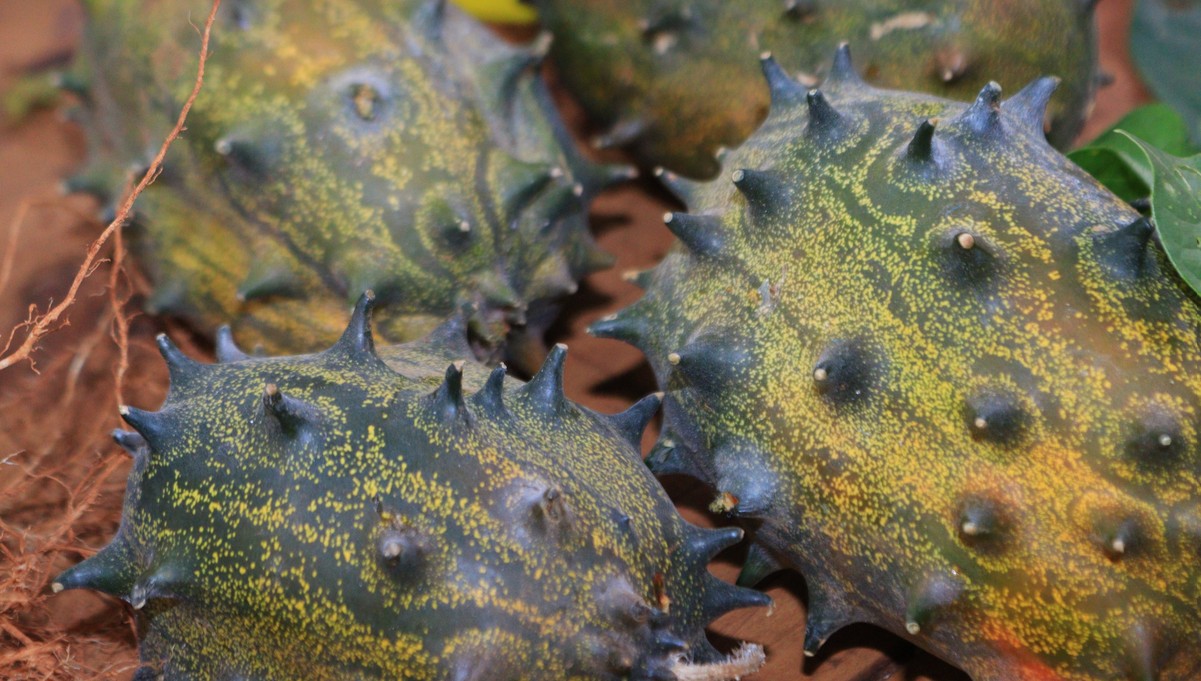
As Kenya accelerates progress toward Vision 2030 and the Sustainable Development Goals (SDGs), the humble thorn melon (Cucumis metuliferus) is emerging as an unexpected but powerful ally. This spiky, nutrient-dense fruit—long overlooked in global markets—is demonstrating remarkable potential to simultaneously address food security (SDG 2), health equity (SDG 3), climate resilience (SDG 13), and economic empowerment (SDG 8). Its story offers a compelling model for how traditional crops can drive sustainable development when strategically integrated into national planning.
The thorn melon’s vibrant orange flesh represents a biochemical marvel perfectly aligned with Kenya’s Vision 2030 health pillar. Packing 30% more vitamin C than oranges per 100g, it directly combats malnutrition affecting 26% of Kenyan children (KNBS 2025). Its beta-carotene content addresses vitamin A deficiency—a leading cause of childhood blindness—while potassium and magnesium levels offer natural solutions for hypertension management, crucial for a nation where 18% of adults face high blood pressure (WHO 2025). The fruit’s 90% water content and low glycemic index make it doubly valuable for arid regions and diabetes prevention, presenting a cost-effective nutritional intervention for public health systems.
In Kenya’s climate-vulnerable counties like Kitui and Turkana, where traditional crops frequently fail, thorn melon thrives with minimal water requirements. This drought tolerance positions it as a strategic crop for SDG 13 (Climate Action), aligning with Vision 2030’s agricultural modernization goals. Organizations like Justice and Mercy (JAM) have demonstrated its economic viability through training programs that help farmers achieve yields within 3-4 months—critical for adapting to unpredictable rainfall patterns. The crop’s natural pest resistance reduces reliance on expensive inputs, making it particularly valuable for smallholder farmers managing shrinking profit margins.
JAM’s integrated approach showcases how thorn melon can advance SDG 8 (Decent Work) by creating circular economic opportunities. Farmers report earning KSh 150-200 per kg—triple traditional crop returns—while women, who comprise 65% of program participants, gain financial independence (SDG 5). Beyond fresh markets, emerging value chains in processing (juices, oils, dried snacks) and cosmetics are creating rural employment. Perhaps most significantly, the fruit’s cultivation reduces Kenya’s reliance on imported superfoods, keeping nutritional wealth within local communities while supporting Vision 2030’s industrialization agenda.
To fully realize the thorn melon’s potential as a driver of sustainable development, Kenya must adopt a multi-pronged policy approach that bridges agricultural innovation with public health and economic transformation. First, strategic nutrition integration could see this indigenous superfruit incorporated into national school feeding programs and maternal health initiatives, directly addressing micronutrient deficiencies that affect nearly one-third of Kenyan children. By partnering with county governments and NGOs, the Ministry of Health could develop standardized protocols for thorn melon supplementation in high-malnutrition regions, simultaneously improving child nutrition outcomes while creating reliable markets for smallholder farmers.
Second, targeted research investment through institutions like KALRO (Kenya Agricultural and Livestock Research Organization) should prioritize developing climate-resilient, high-yield thorn melon varieties tailored to Kenya’s diverse agro-ecological zones. This requires doubling down on germplasm collection, agronomic trials, and post-harvest technologies to extend shelf life—critical for reducing the 40% post-harvest losses currently plaguing small-scale producers. Parallel investment in nutrigenomics research could unlock the fruit’s full phytochemical potential, positioning Kenya as a global leader in indigenous crop biofortification.
Third, proactive market development under the African Continental Free Trade Area (AfCFTA) framework could transform thorn melon into a premium Kenyan export commodity. The Ministry of Industrialization should spearhead value-addition initiatives—from freeze-dried snacks to functional food ingredients—while the Kenya Bureau of Standards fast-tracks international certification protocols. Strategic branding as “Africa’s Golden Superfruit” could capture the $50 billion global functional foods market, with special focus on health-conscious consumers in Europe and Asia. Crucially, these interventions must be implemented through participatory models that center smallholder farmers—particularly women and youth—ensuring equitable benefits across the value chain. When synchronized with Vision 2030’s industrialization agenda and the Big Four Action Plan’s food security pillar, this policy triad could position thorn melon as both a nutritional safeguard and an economic gamechanger for rural communities.
The thorn melon’s rise from neglected crop to development catalyst offers profound lessons. It demonstrates how aligning indigenous agricultural knowledge with modern science can yield solutions to interconnected challenges—malnutrition, climate vulnerability, and rural poverty. As JAM’s work proves, this spiky fruit represents more than agricultural innovation; it embodies a paradigm where food systems simultaneously heal bodies, ecosystems, and economies.
For Kenya, scaling thorn melon production could accelerate progress across multiple Vision 2030 pillars while establishing global leadership in sustainable nutrition. Its journey reminds us that sometimes, the most revolutionary solutions come not from high-tech interventions, but from nature’s resilient, underappreciated gifts—waiting only for recognition and strategic investment to transform communities. As climate pressures intensify, this drought-resistant superfruit may well become a symbol of how African nations can write their own sustainable development narratives.